

Shopify vs Finqu pricing
What does Shopify really cost?
Shopify is one of the strongest commerce platforms in the world. But looking only at the monthly plan price does not show the real cost of running a growing store. This page breaks down what Shopify really costs.

With Shopify, the monthly plan is only the start
Shopify looks affordable at the beginning. But the real cost starts to surprise when the store needs more than the monthly plan.
What gets added on top?
Shopify cost stack
The real cost of Shopify is built in layers. Some costs are easy to see before launch. Others stay hidden at the beginning and appear later as your store grows.
Shopify payment rates
third-party transaction fees
local payment providers
POS Pro
premium theme
paid apps
Finqu works differently
Finqu keeps the model simpler: no platform fees on sales, direct payment providers, premium themes included and POS included.
The 4 cost layers behind Shopify pricing
Before launch
Premium design, theme choices and early app decisions.
When sales grow
Payment setup, local payment methods and percentage-based fees.
When you sell in person
POS costs, retail locations and in-store selling.
When you expand
More stores, markets and app stack costs.
1. Before launch
Premium design means a paid theme with Shopify
Shopify’s free themes give merchants a basic starting point. But building a polished, conversion-focused store quickly leads to the paid theme market, where stronger layouts, richer sections and more complete design systems become part of the cost.
Finqu includes premium-level themes at no extra cost. Each theme comes with pre-designed sections and content blocks, giving merchants a flexible design system for building a professional store that looks and works exactly the way they want.
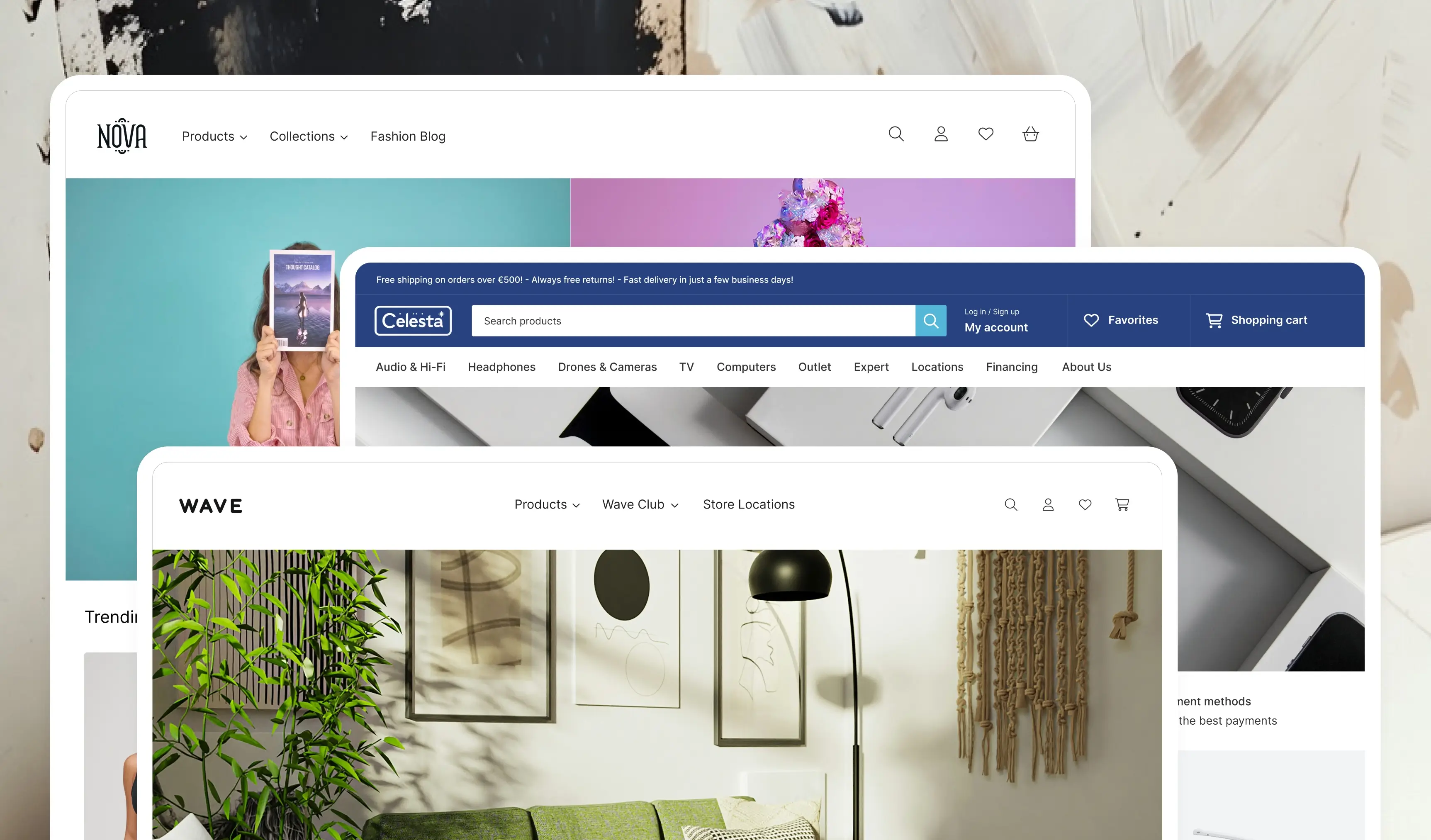
Finqu premium themes
$250–$400
Shopify premium theme range
A stronger Shopify design adds a paid theme cost before launch.
$0
Finqu premium themes
Start with professional themes and ready-made sections included in the platform.
2. When sales grow
Shopify fees grow with your revenue
Shopify’s monthly plan stays predictable, but the fees connected to payments and third-party payment providers grow with every sale.
Shopify Payments is built on Stripe, but merchants pay Shopify’s own plan-based payment rates. When a store needs local payment methods outside Shopify Payments, third-party transaction fees become part of the cost.
Finqu uses a different model. Merchants connect supported payment providers directly, benefit from lower rates and pay no Finqu platform fees on sales.
Local payment methods change the real cost
In many European markets, customers expect local payment methods they know and trust. With Shopify, offering those methods outside Shopify Payments adds third-party transaction fees on every sale.
Monthly sales
2% fee / month
2% fee / year
$5,000
$100
$1,200
$25,000
$500
$6,000
$50,000
$1,000
$12,000
$100,000
$2,000
$24,000
The fee gets smaller, but it does not disappear
At $100,000 in monthly sales, a 2% third-party transaction fee becomes $24,000 per year.
Upgrading to the next Shopify plan reduces the third-party transaction fee, but it still leaves a 1% fee on every sale. At $100,000 in monthly sales, that is still $12,000 per year.
And because the fee is charged from revenue, not profit, the real impact is bigger than it first looks. If your store runs on a 20% margin, a 2% fee on sales equals 10% of your margin.
That is growth budget lost to platform fees.

Finqu gives you significantly lower platform costs
68%
Lower platform cost at $50k annual sales
At this stage, a 2% third-party transaction fee already adds $1,000 per year on top of the Shopify monthly plan. With Finqu Essentials, that fee does not exist.
45%
Lower platform cost at $1M annual sales
Even on Shopify Advanced, a 0.6% third-party transaction fee adds $6,000 per year. In this example, Finqu Plus leaves $4,320 more available for growth.
$30,000
Fee impact at $5M annual sales
At higher revenue, small percentages become serious money. A 0.6% fee on $5M annual sales equals $30,000 per year. With Finqu, that platform fee does not exist.
3. When you sell in person
Shopify POS Pro adds another monthly cost
Finqu includes POS from the start, so merchants can sell online and in person without adding a separate paid POS plan. With Shopify, POS Lite is included, but a more complete retail setup leads to Shopify POS Pro, which adds a monthly cost for each retail location.
That difference becomes important as soon as you sell in more than one place. One store, several pop-up locations, multiple sales points or a growing retail network all make POS pricing part of the real platform cost.
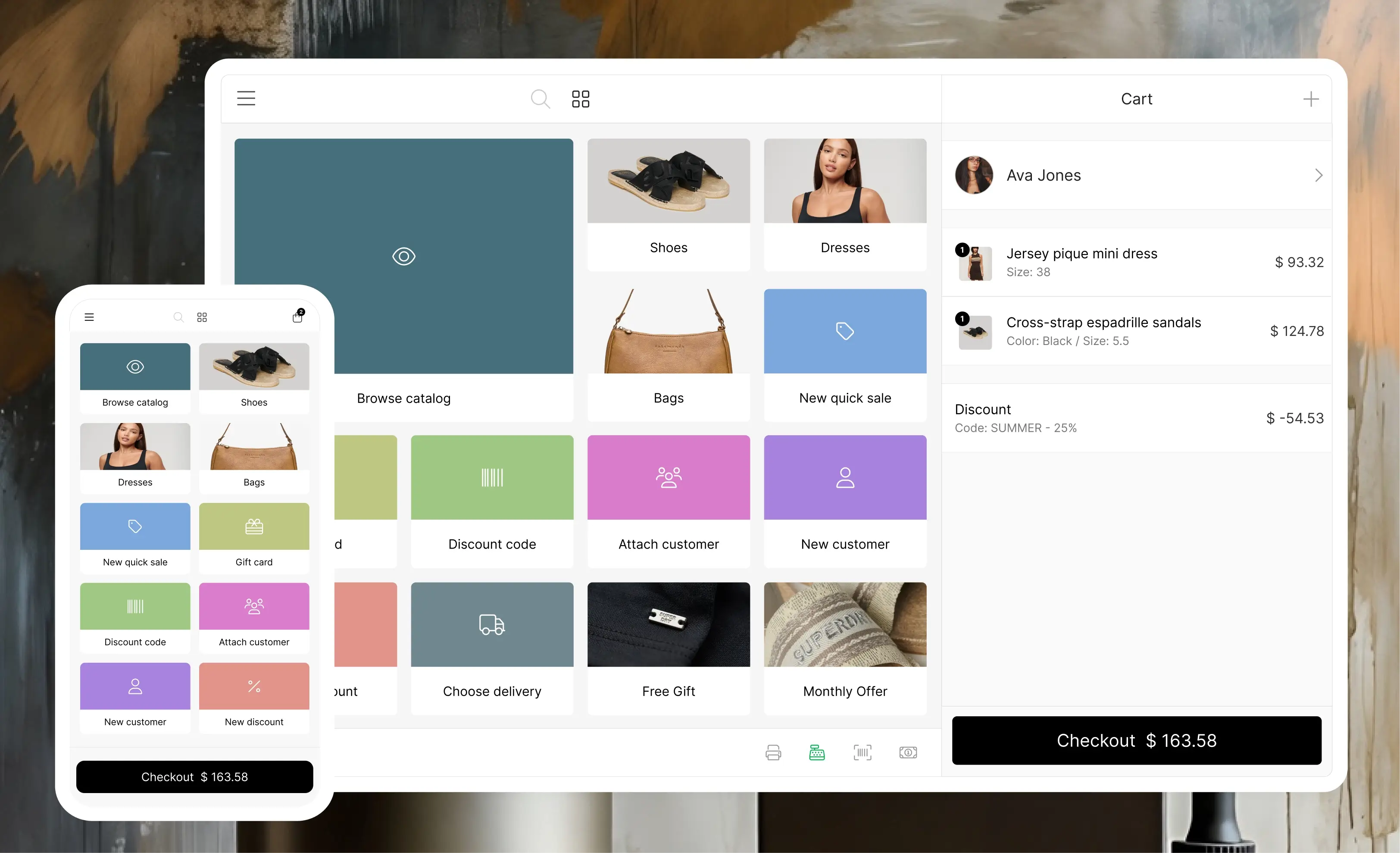
Finqu POS
Shopify
$79/month
Shopify POS Pro adds a monthly cost for every retail location.
Finqu
$0/month
POS is included with Finqu from the start, and additional POS locations can be added for just $49/month.
4. When you expand
Multiple Shopify stores mean multiple subscriptions
Growth often means selling to different audiences in different ways. One business may need a B2C store, a B2B store and a country-specific store.
With Shopify, adding another online store means creating another store structure. Even inside Shopify Plus expansion stores, products, collections and inventory are not synced between stores by default. That means more setup, more duplicated work and more systems to keep aligned.
Finqu is built for connected commerce. Merchants can manage multiple online stores under one account, keeping products, orders, customers, inventory and channels connected while keeping the cost model simpler.
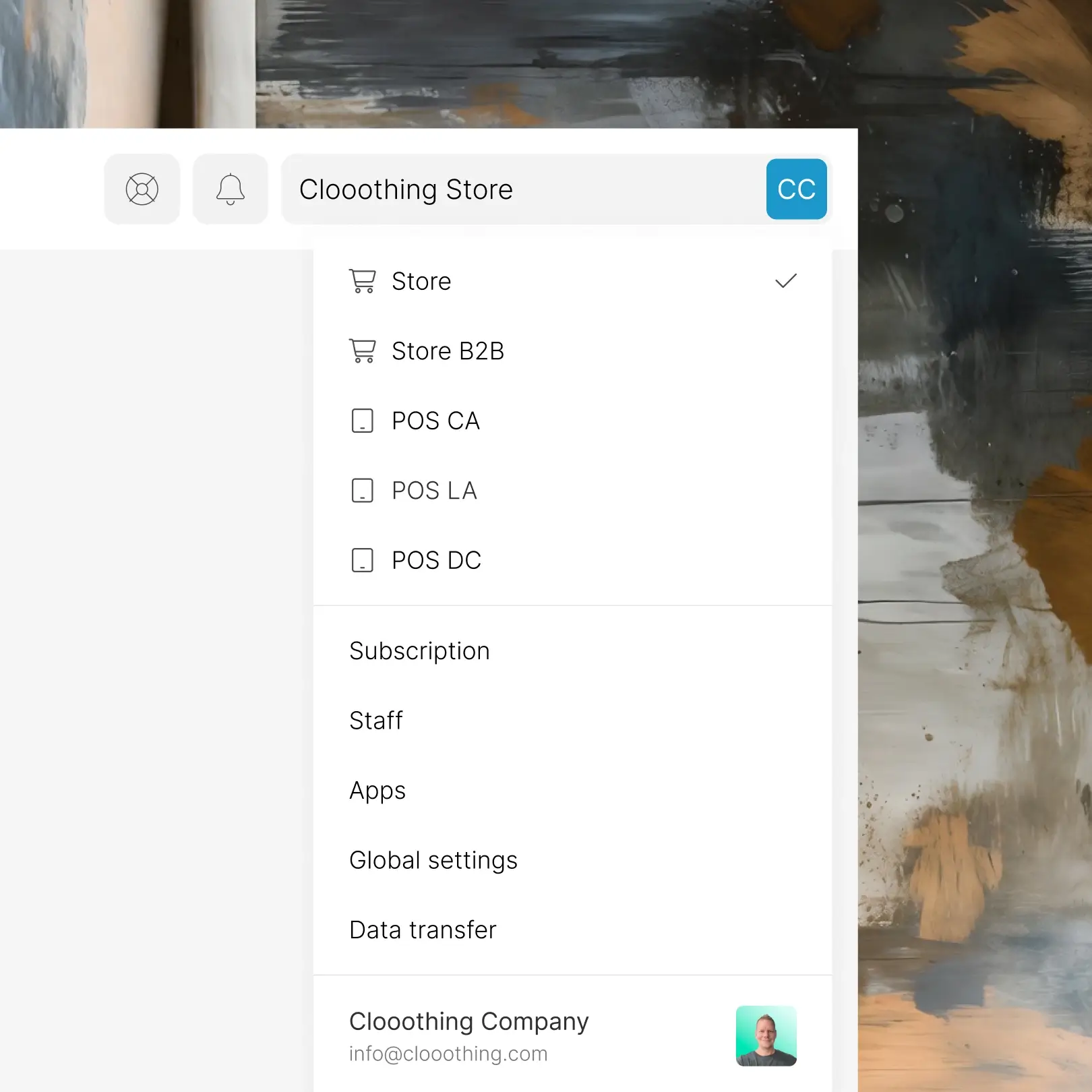
Finqu Unified Commerce
Three stores. One business. Higher work costs.
Shopify
3 separate accounts
Each online store becomes its own Shopify store structure. Products, inventory, settings and workflows need to be managed and kept aligned separately.
Finqu
3 stores, 1 account
Manage B2C, B2B and market-specific stores under one connected commerce core. Products, orders, customers, inventory and channels stay connected.
$1,880
Saved admin work
If connected store data removes 40 hours of duplicated admin work per month at $47/hour, that equals $1,880/month in saved work. Platform cost savings come on top.
Shopify expands through apps, and apps add monthly costs
Shopify covers the basics and expands through apps. When a store needs more advanced product options, reviews, search, subscriptions, automation, B2B features, reporting or marketing tools, those needs often move into the app layer.
That app ecosystem is one of Shopify’s strengths, but it also changes the real cost. Many apps are paid monthly, so the total platform cost grows as more features are added on top of the plan.
Example: 8 apps at $25/month add $200/month and $2,400/year on top of the Shopify plan.
Shopify or Finqu?
Cost area
Shopify
Finqu
Entry plan
Basic from $23/month
Essentials from $39/month
Higher plan
Plus from $2000/month
Plus from $439/month
Platform fees on sales
Apply with external payment providers
No platform fees on sales
Payment providers
Shopify plan-based rates and third-party fees
Direct payment providers and lower rates
Local payment methods
Add transaction fees outside Shopify Payments
Supported providers without Finqu platform fees
Premium design
Paid theme cost for stronger design systems
Premium themes included
POS
POS Pro costs extra per retail location
POS included from the start
Extra POS locations
$79/month per POS Pro location
$49/month per additional POS location
Multiple online stores
Separate store structures
Multiple stores under one account
Apps
More features often mean more app subscriptions
More core value included
Summary
Choosing an ecommerce platform is not only about the plan price. It is about what happens after launch — when sales grow, new channels open, payment needs change and the business becomes more complex.
Shopify gives merchants access to the world’s largest commerce ecosystem. Finqu is built for merchants who want a modern platform that stays easier to manage and more predictable to grow with.
If your goal is to launch fast, keep costs clear and build a connected commerce business without stacking fees, add-ons and separate systems along the way, Finqu is the smarter place to start.
Compare Finqu with Shopify
If your goal is to launch fast, keep costs clear and build a connected commerce business without stacking fees, add-ons and separate systems along the way, Finqu is the smarter place to start.


Try Finqu and feel the difference
Start building your store and experience a simpler way to launch, manage and grow your commerce business.
Get started in minutes. Try it free for 7 days.