Point of sale explained — what POS systems are and why seamless POS matters in modern commerce

Point of sale systems are no longer just tools for physical stores. In modern commerce, POS is a critical part of a unified selling experience that connects online stores, inventory, customers, and payments into one seamless system.
In this guide, we explain what a point of sale (POS) system is, how it works, how it differs from e-commerce checkout, and why seamless POS is becoming essential for growing businesses.

What is a point of sale (POS) system?
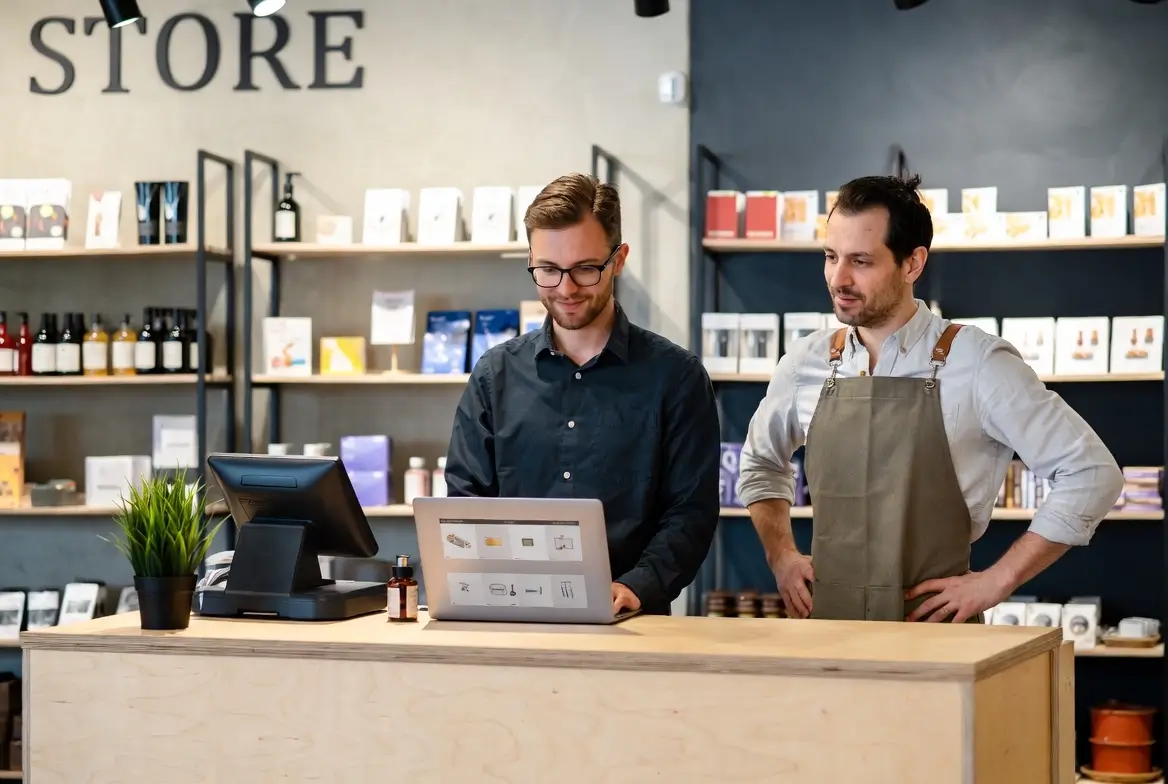
A point of sale (POS) system is the place where a transaction happens — where a customer pays and a sale is completed. Traditionally, this meant a cash register in a physical store. Today, POS systems are digital, cloud-based, and deeply connected to online commerce.
A modern POS system typically includes:
- Checkout interface for in-store sales
- Payment processing (cards, contactless, digital wallets)
- Product and inventory management
- Receipt handling (digital or printed)
- Sales reporting and analytics
POS is no longer just about payments — it’s about connecting sales channels into one system.
How a POS system works in practice
From the customer’s point of view, a POS transaction is quick and simple. Behind the scenes, the system performs multiple actions instantly.
A typical POS transaction includes:
- Product is scanned or selected
- Price, tax, and discounts are calculated
- Payment is processed
- Inventory is updated in real time
- Sale data is recorded for reporting
When POS is connected to your ecommerce platform, this same logic applies to both in-store and online sales.
POS vs ecommerce checkout — what’s the difference?
While POS and ecommerce checkout serve similar purposes, they traditionally lived in separate worlds.
POS systems focus on:
- In-person transactions
- Physical locations
- Card-present payments
Ecommerce checkout focuses on:
- Online transactions
- Shipping and delivery
- Digital payments
In modern commerce, these systems are increasingly merging into one unified commerce experience.
What is seamless POS?
A seamless POS means that in-store and online sales operate from the same system — without manual syncing or separate tools.
With seamless POS:
- Inventory is shared across all channels
- Customer data is unified
- Pricing and discounts stay consistent
- Reporting shows the full business picture
Customers don’t see channels — they see one brand. Seamless POS makes that possible.

Why seamless POS matters in 2026
Consumer behavior has changed. Customers expect to move effortlessly between online and offline experiences.
Seamless POS enables:
- Buy online, pick up in store
- In-store purchases with online inventory
- Unified loyalty and customer profiles
- Real-time stock visibility
Businesses without seamless POS often struggle with overselling, inconsistent data, and fragmented customer experiences.
Key features of a modern POS system
Not all POS systems are equal. In 2026, a modern POS should support:
1. Unified inventory management
Inventory should update instantly across all sales channels. This prevents overselling and improves customer trust.
2. Flexible payment methods
A modern POS supports:
- Credit and debit cards
- Contactless payments
- Digital wallets
- Buy now, pay later (where applicable)
Payment flexibility improves conversion both in-store and online.
3. Customer profiles and data
A strong POS system tracks customer behavior across channels, enabling:
- Personalized service
- Better marketing insights
- Unified purchase history
4. Real-time analytics and reporting
POS data feeds directly into business analytics, showing:
- Sales performance
- Best-selling products
- Channel-specific trends
This data is essential for scaling decisions.
POS systems and unified commerce
POS is a cornerstone of unified commerce — a model where all sales, inventory, customers, and data live in one system.
Unified commerce differs from traditional omnichannel by removing silos entirely. Instead of syncing systems, everything runs on a single platform.
Modern ecommerce platforms are increasingly built with POS capabilities at their core.
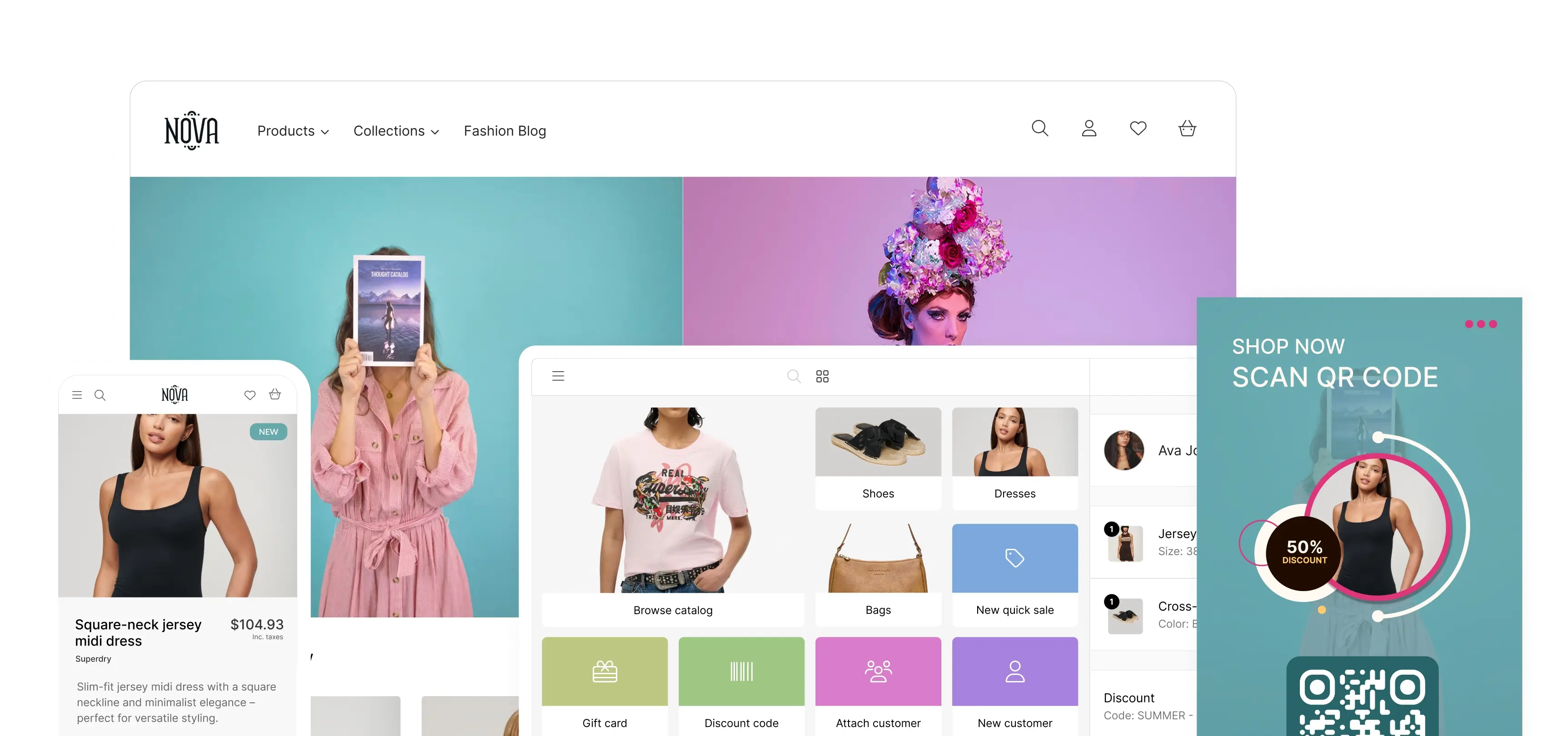
POS on modern ecommerce platforms
Instead of using separate POS and ecommerce tools, many businesses now choose platforms where POS is built in or tightly integrated.
For example, Finqu POS is designed to support unified commerce, connecting online sales, checkout, inventory, and customer data into one system — reducing complexity and improving scalability.
Who needs a seamless POS system?
Seamless POS is especially valuable for:
- Businesses selling both online and in-store
- Brands planning pop-up stores or events
- Retailers expanding internationally
- Merchants who want unified inventory and reporting
Even online-first businesses benefit from POS readiness as they grow.
How to choose the right POS solution
When evaluating POS systems, consider:
- Does it integrate with your ecommerce platform?
- Is inventory unified across channels?
- Does it support your preferred payment methods?
- Can it scale as your business grows?
- Is reporting clear and actionable?
The best POS system is one you don’t have to think about — it just works.
Final thoughts
Point of sale systems have evolved far beyond cash registers. In modern commerce, POS is a strategic tool that connects channels, data, and customer experiences.
As e-commerce and physical retail continue to merge, seamless POS is no longer a nice-to-have — it’s a competitive advantage.
If you’re planning to create an online store that’s built for long-term growth, it’s worth understanding how POS fits into the bigger picture. We’ve also explored this in our guide to choosing the best ecommerce platform, where unified commerce and scalability play a central role.

Turn your idea into a thriving business — with all the tools you need, right from the start.