Unified commerce explained — what it is and why it’s the future of selling everywhere
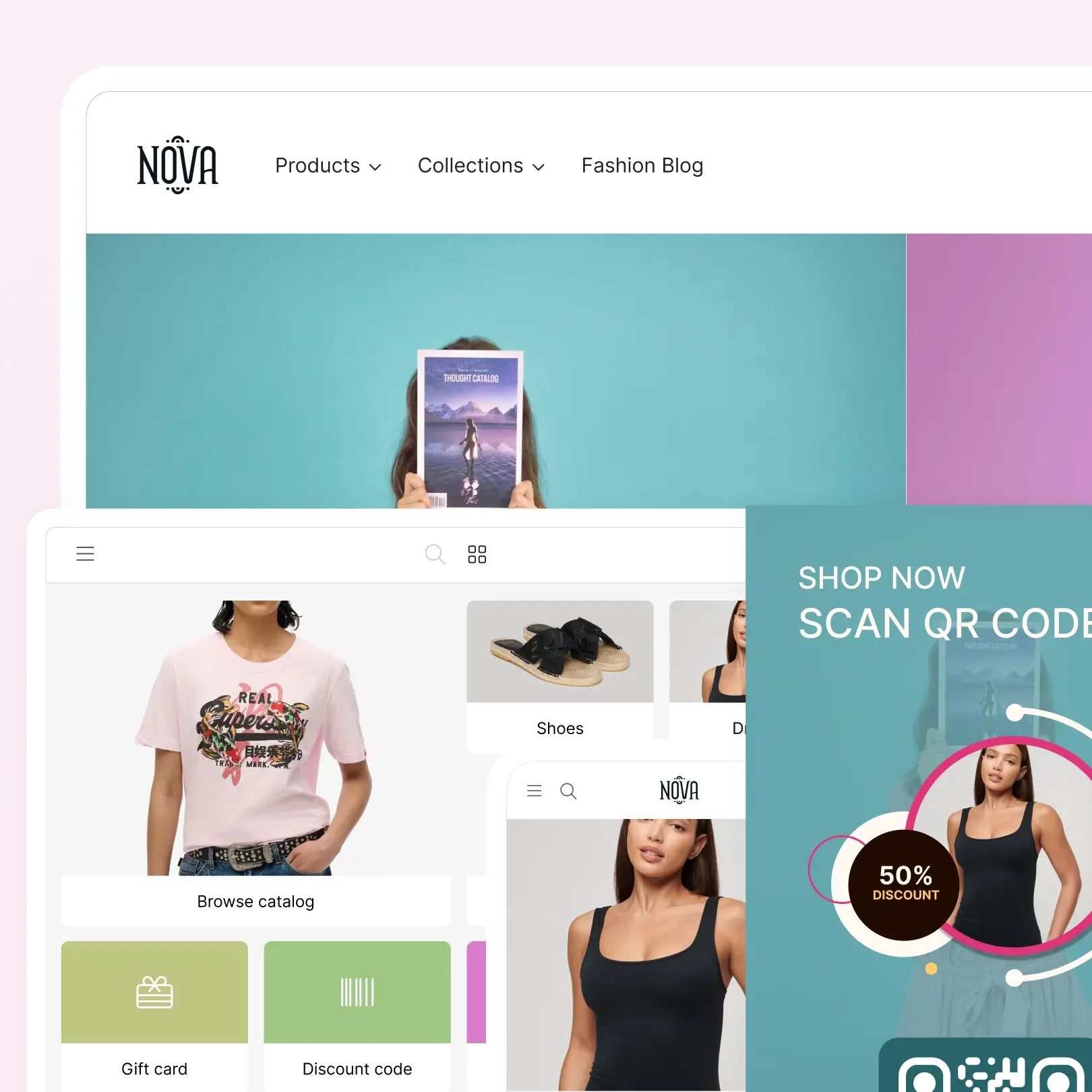
Unified commerce is changing how modern businesses sell, scale, and serve customers. Instead of managing separate systems for online stores, physical retail, payments, inventory, and customers, unified commerce brings everything together into one connected platform.
In this guide, we explain what unified commerce is, how it differs from ecommerce and omnichannel, and why it’s becoming the foundation of modern commerce.
What is unified commerce?
Unified commerce is a commerce model where all sales channels, systems, and data operate within a single, shared platform.
This means:
- One inventory across all channels
- One customer database
- One checkout and payment logic
- One reporting and analytics layer
Instead of syncing multiple systems together, unified commerce removes silos entirely.

Ecommerce, omnichannel, and unified commerce — what’s the difference?
These terms are often used interchangeably, but they represent very different approaches.
Ecommerce
- Focuses on online sales only
- Separate from in-store systems
- Limited visibility across channels
Omnichannel
- Multiple channels connected via integrations
- Systems still operate independently
- Data syncing introduces complexity
Unified commerce
- One platform for all channels
- Real-time shared data
- No system-to-system syncing
Unified commerce is the evolution of omnichannel — simpler, cleaner, and more scalable.
Why unified commerce matters in 2026
Customer behavior has changed permanently. Buyers move fluidly between online and offline touchpoints and expect consistency everywhere.
Unified commerce enables:
- Buy online, pick up in store
- In-store purchases using online inventory
- Unified pricing and promotions
- Consistent customer experience across channels
Businesses that rely on fragmented systems often struggle with overselling, inaccurate data, and operational friction.

Core components of unified commerce
A true unified commerce platform includes several essential components working together.
1. Unified inventory management
Inventory updates instantly across all channels. This prevents overselling and enables accurate stock visibility in real time.
2. Unified checkout and payments
Whether a sale happens online or in-store, checkout logic and payment processing follow the same rules, pricing, and discounts.
3. Unified customer data
Customer profiles combine online and offline behavior, allowing:
- Personalized experiences
- Better customer support
- Smarter marketing decisions
4. Unified analytics and reporting
All sales data flows into one reporting layer, giving a complete view of business performance across channels.

Unified commerce vs traditional integrations
Many businesses attempt to achieve “unification” through integrations. This often leads to complexity rather than clarity.
Traditional integrations
- Multiple systems
- Sync delays
- Data conflicts
- Higher maintenance cost
Unified commerce
- One system
- Real-time data
- Lower operational overhead
- Easier scaling
Unified commerce reduces technical debt and operational risk.
Who benefits most from unified commerce?
Unified commerce is especially valuable for:
- Brands selling both online and in physical locations
- Retailers running pop-up stores or events
- Businesses expanding internationally
- Merchants planning long-term scale
Even online-first brands benefit as soon as they add new channels.

Unified commerce and automation
Unified systems unlock automation opportunities that fragmented setups can’t support.
Examples include:
- Automatic inventory updates
- Unified order routing
- Centralized pricing rules
- Smarter analytics and forecasting
Automation becomes simpler when everything lives in one platform.
Unified commerce as the foundation for AI
AI works best when data is centralized. Unified commerce creates the perfect foundation for intelligent systems.
With unified data, AI can:
- Detect patterns across channels
- Optimize pricing and promotions
- Improve demand forecasting
- Assist merchants with insights and actions
This is why unified commerce and AI-first platforms are closely connected.
Unified commerce on modern platforms
Modern ecommerce platforms are increasingly built around unified commerce principles.
For example, Finqu is designed to bring online sales, checkout, inventory, customer data, and analytics into a single system — reducing complexity and enabling smarter growth.
How to move toward unified commerce
Transitioning to unified commerce doesn’t require rebuilding everything at once.
Start by asking:
- Are my systems sharing real-time data?
- Do I have one source of truth for inventory?
- Can I see all customer interactions in one place?
- Is reporting unified or fragmented?
Choosing a platform built for unified commerce simplifies this transition dramatically.
Final thoughts
Unified commerce isn’t just a technical concept — it’s a way of building a business that’s simpler to operate and easier to scale. By removing silos between channels, data, and systems, merchants gain clarity and control as they grow.
If you’re planning to create an online store that’s ready for long-term growth, unified commerce provides a strong foundation. To see how different solutions approach this, you can also explore our ecommerce platforms comparison, where unified architecture plays a key role.

Turn your idea into a thriving business — with all the tools you need, right from the start.