Migrating from Shopify to Finqu: How Takomo Built a Fully Custom Online Store
Takomo built an online store on its own terms
Takomo Systems wanted an online store that serves the purchase of custom gaming PCs just as well as the company itself builds them. When the decision was made to completely overhaul the most important part of the store, Takomo simultaneously built the entire online store heavily around its own business—and switched platforms from Shopify to Finqu.
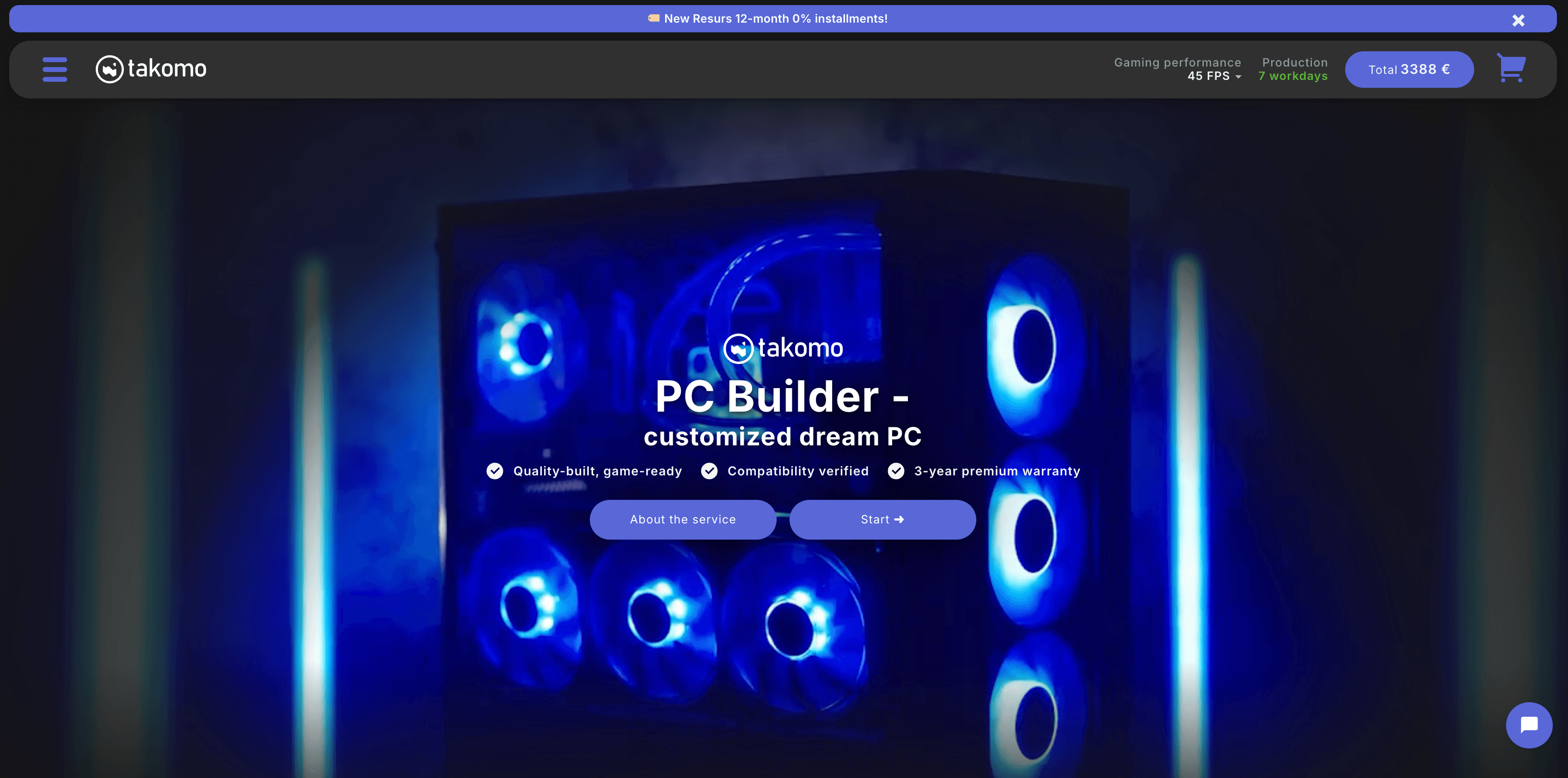
In Takomo's online store, you don't just pick a product and go to checkout. The customer can build their own gaming PC component by component, compare options, get help with their choices, and track the manufacturing progress of their PC after ordering.
Everything happens in an online store that looks and feels like Takomo.
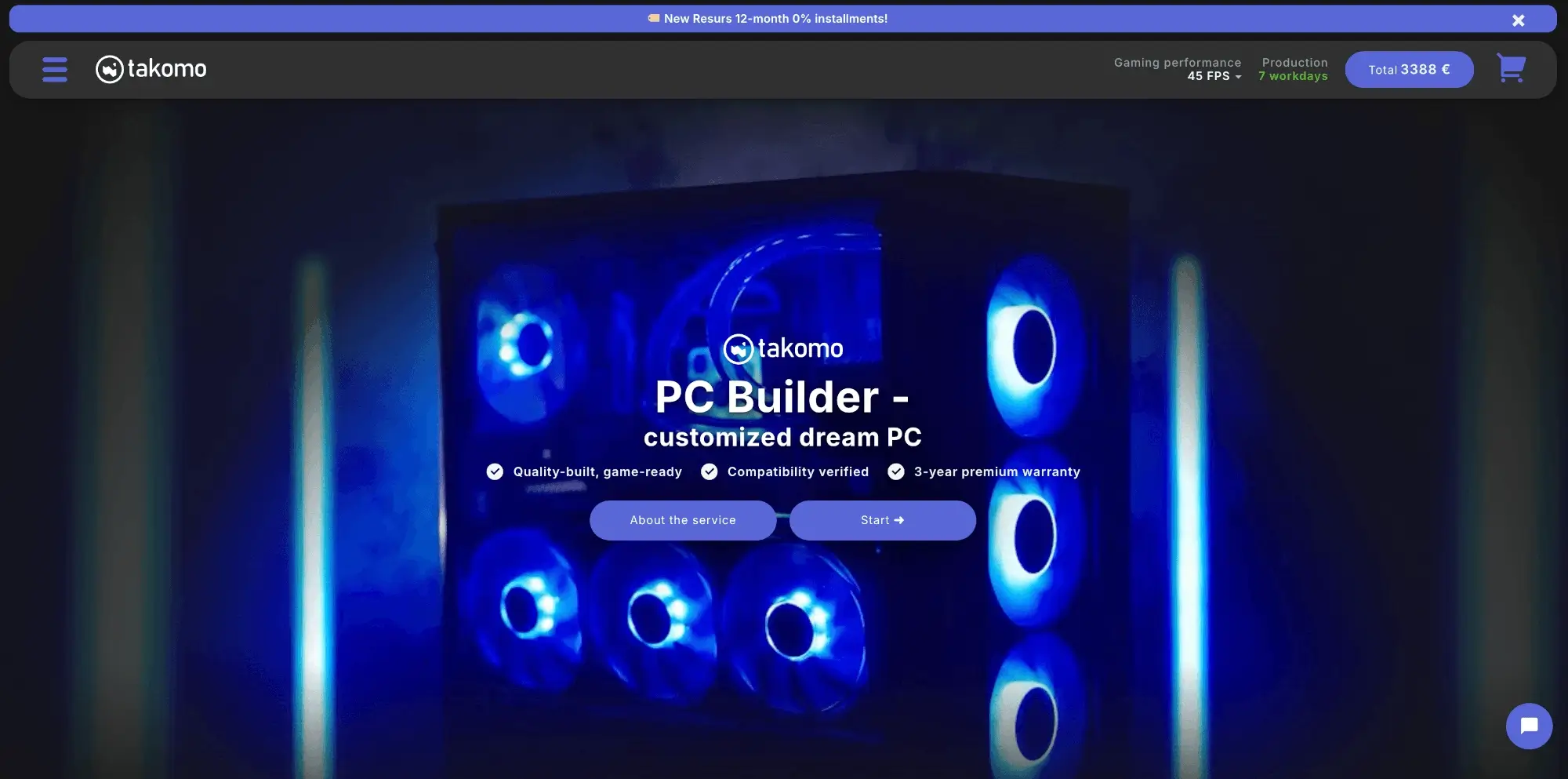
Gaming PCs, one machine at a time
Takomo Systems started its operations in 2017. The first PCs were assembled in a living room, but over the years, operations have grown into their own production facilities in Järvenpää.
One thing has remained the same, however: Takomo builds its computers in Finland and offers an alternative to mass-produced gaming PCs. Each computer is built around the customer's own preferences and needs, and this same philosophy extends to the online store.
Buying a custom gaming PC always involves a lot of choices. The processor, graphics card, memory, motherboard, and other components must work together, but technical compatibility is just the beginning. The customer should also be able to understand where spending more money actually shows in usage, and in which choices the difference between two options is mostly just specs.
That is why the online store's job is not just to showcase components. It also needs to help build a suitable computer.
“For us, the online store is practically a salesperson, too. The customer doesn't need to know beforehand what the difference between two processors is—the store's task is to communicate in plain language and just enough so the customer can make a smart purchasing decision.
That's why the configurator tells you directly which part is bottlenecking the system and where the next hundred euros will actually be felt in use. If buying feels like interpreting a component list, we have failed.”
When the store's most important part is rebuilt
Takomo's old Shopify store worked well, but there was a lot in the PC Builder in particular that they wanted to do better in the next version.
Takomo had built its first PC Builder back in 2021, when a global component shortage made building computers exceptionally challenging. With the builder, customers could build a PC from parts that were actually available. Over the years, it grew into a central part of how Takomo sells computers online.
When the planning for the next version began, it was no longer about a minor update. The PC Builder would practically be rebuilt, and at the same time, an opportunity opened up to look at the entire online store with fresh eyes.
The platform changed, too.
Shopify was left behind, and the new store was built on Finqu.
PC Builder 2.0 makes difficult choices easy
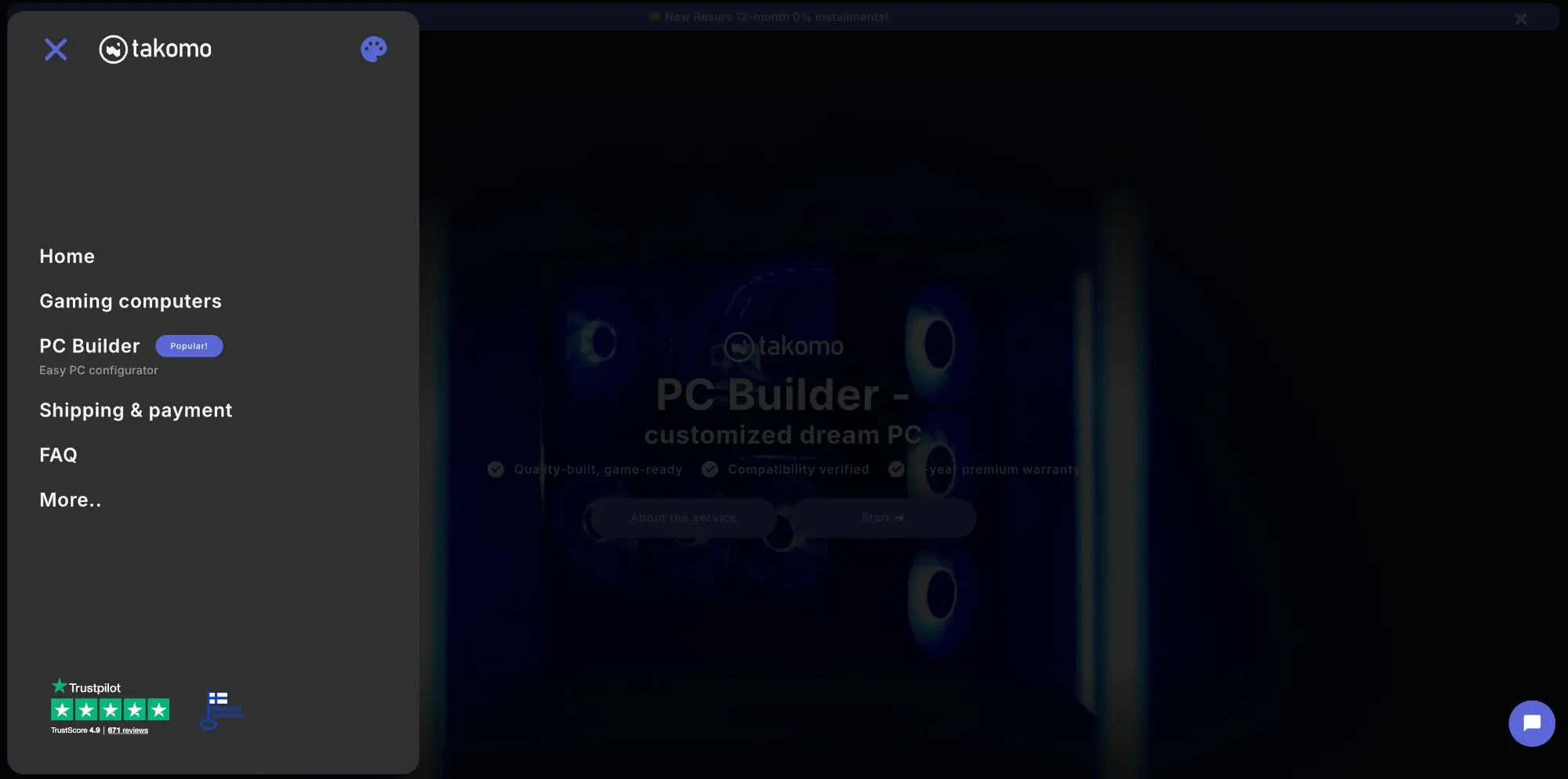
The most visible part of the new store is PC Builder 2.0.
Previously, the customer had to choose between AMD and Intel-based setups even before the actual comparison. Now, both can be found in the same experience, and components can be compared directly right where the custom PC is being built.
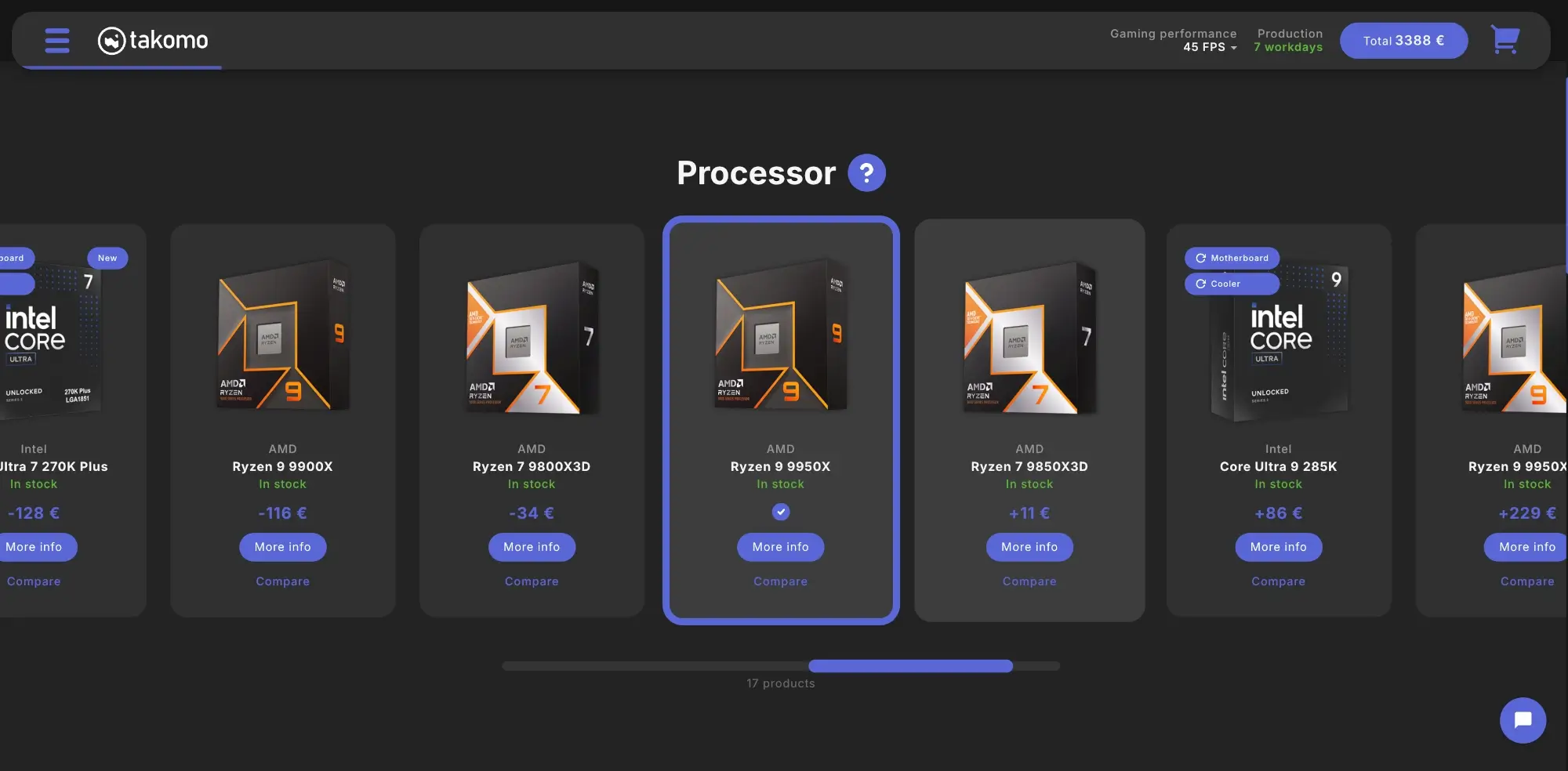
The customer also doesn't need to know the technical differences between different motherboards beforehand or open new tabs side-by-side to figure out what actually changes between two options. The builder brings all the essential information into the selection process itself.
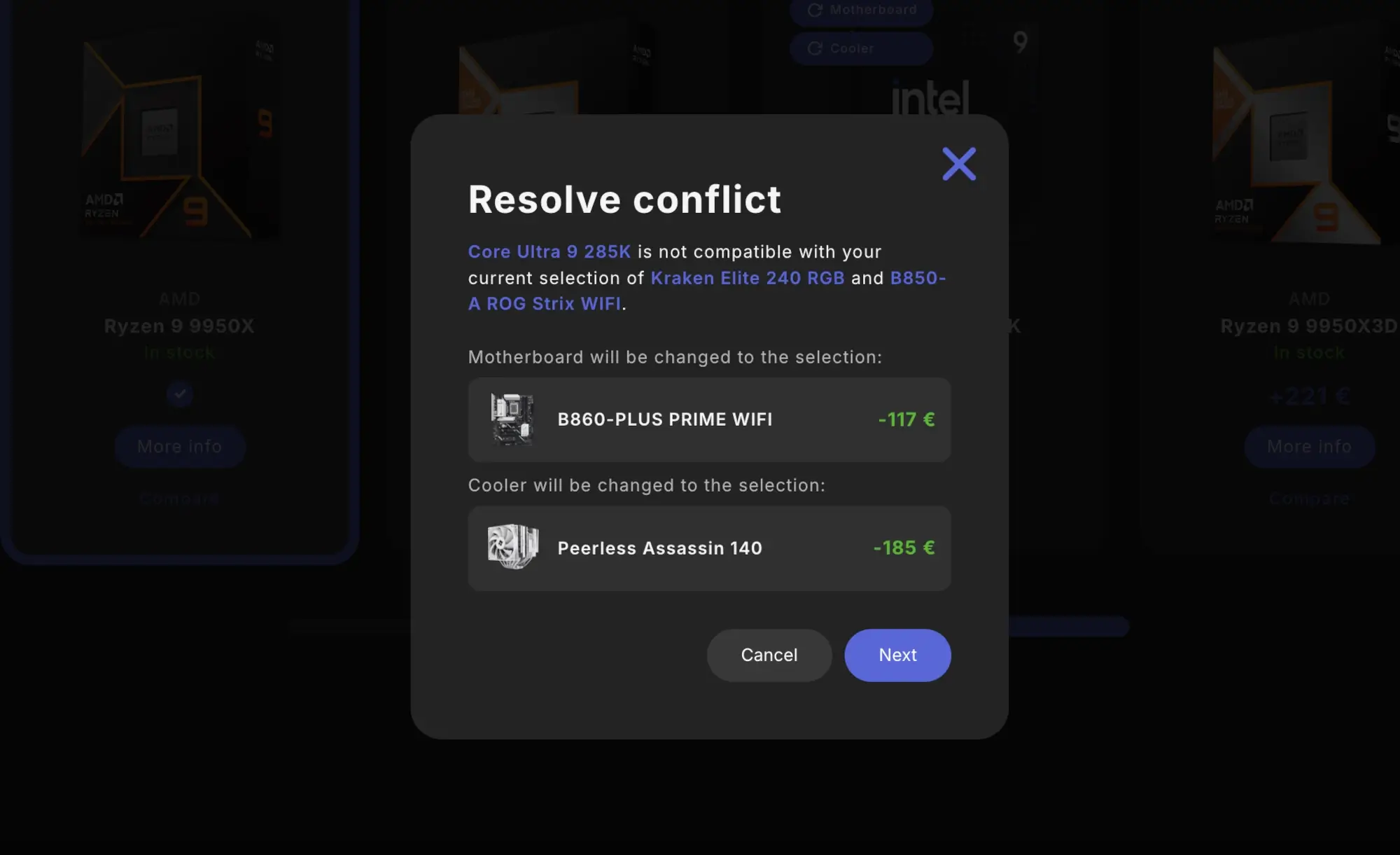
The change might sound like a mere UI redesign, but for Takomo, it's about something much bigger: a way to make selling a complex product online easy.
The store doesn't just give options. It helps choose between them.
The store doesn't have to look standard
Takomo wasn't satisfied with customizing just the builder's functionality.
Six completely different visual themes were built for the store, following the customer throughout the purchasing journey from the front page all the way to the order page. The exact same gaming PC can be built in a cute cat-girl world, a parchment-themed view, or a "Takomo 9x" theme parodying Windows 95.
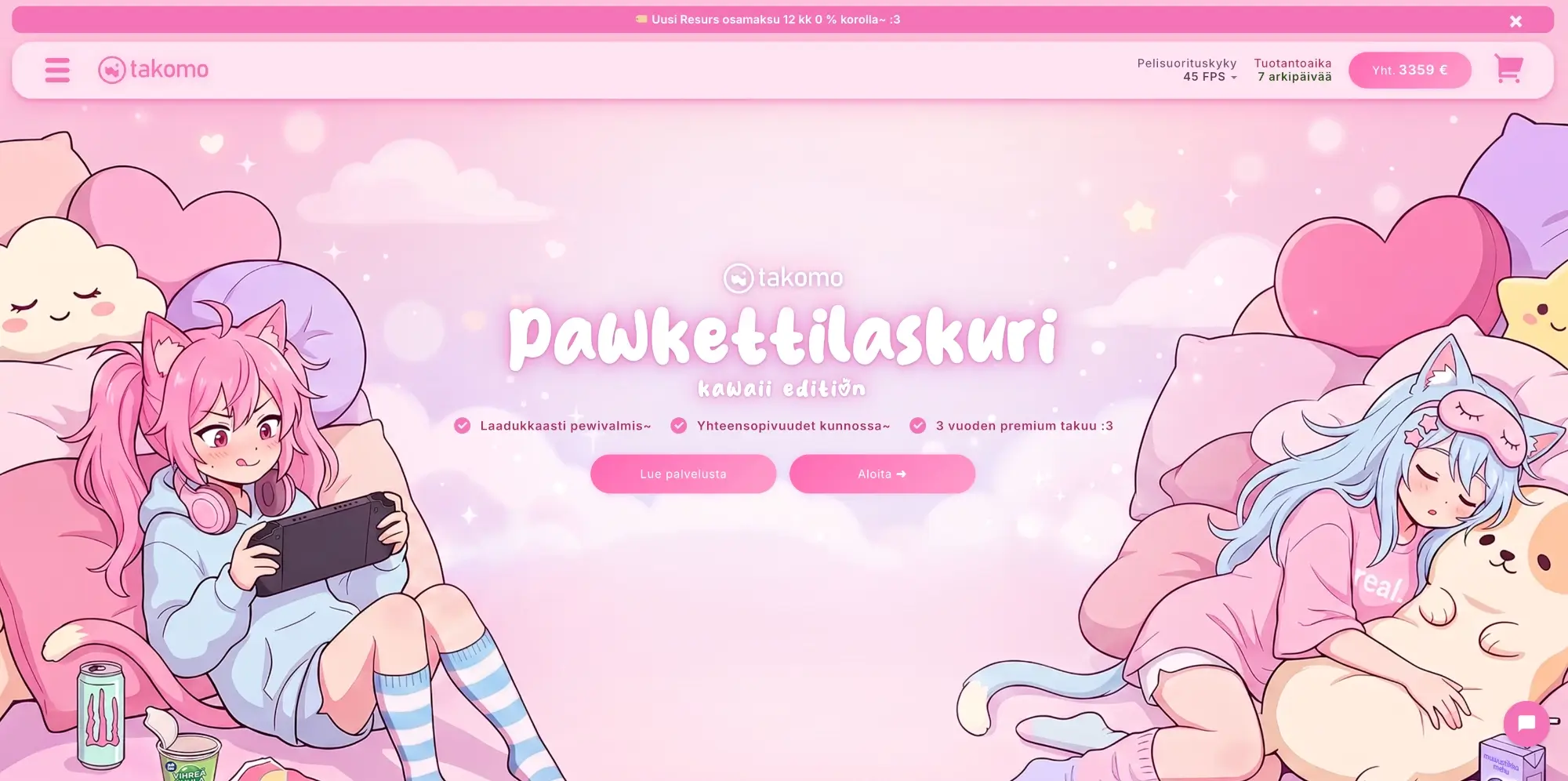
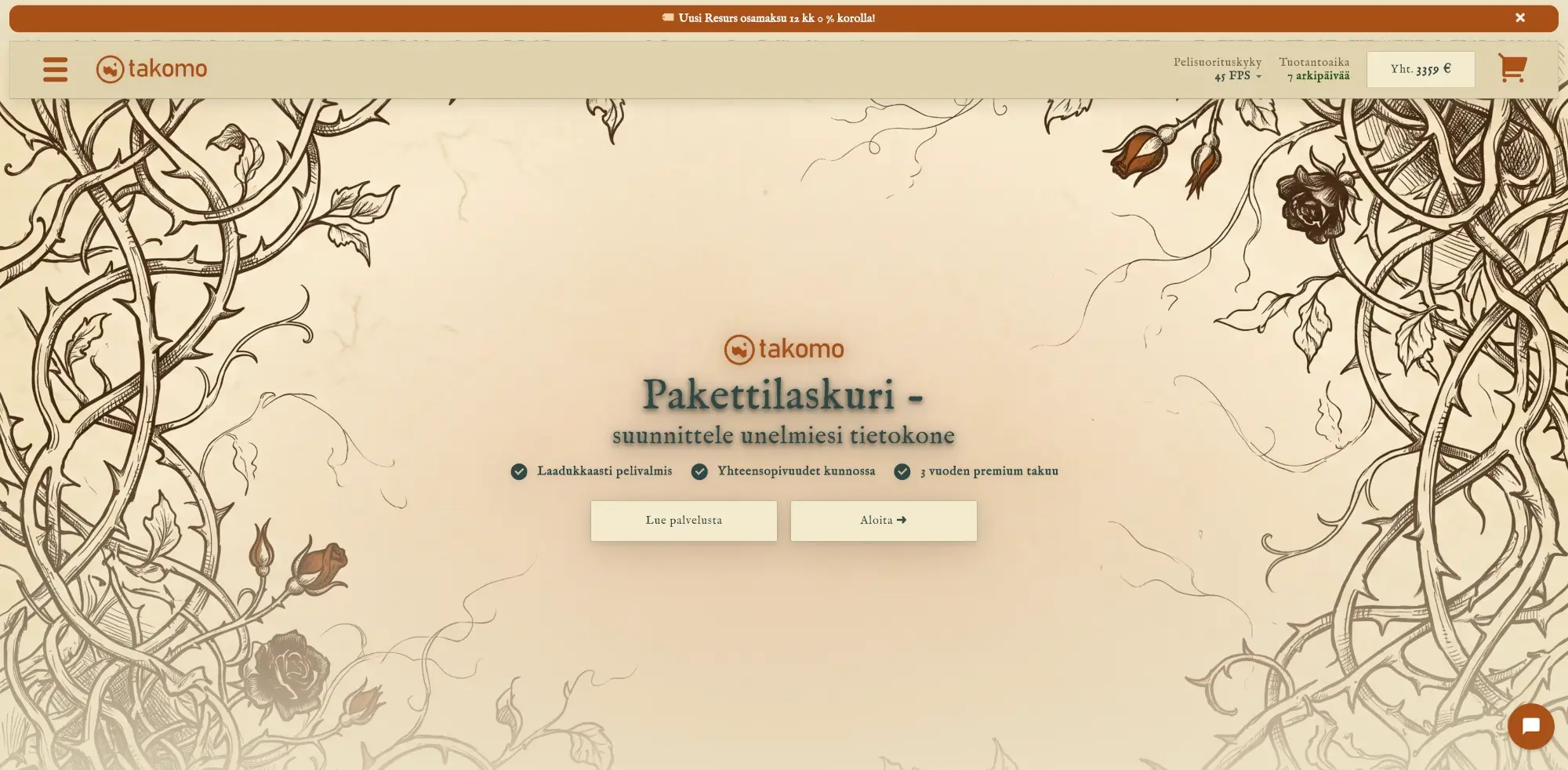
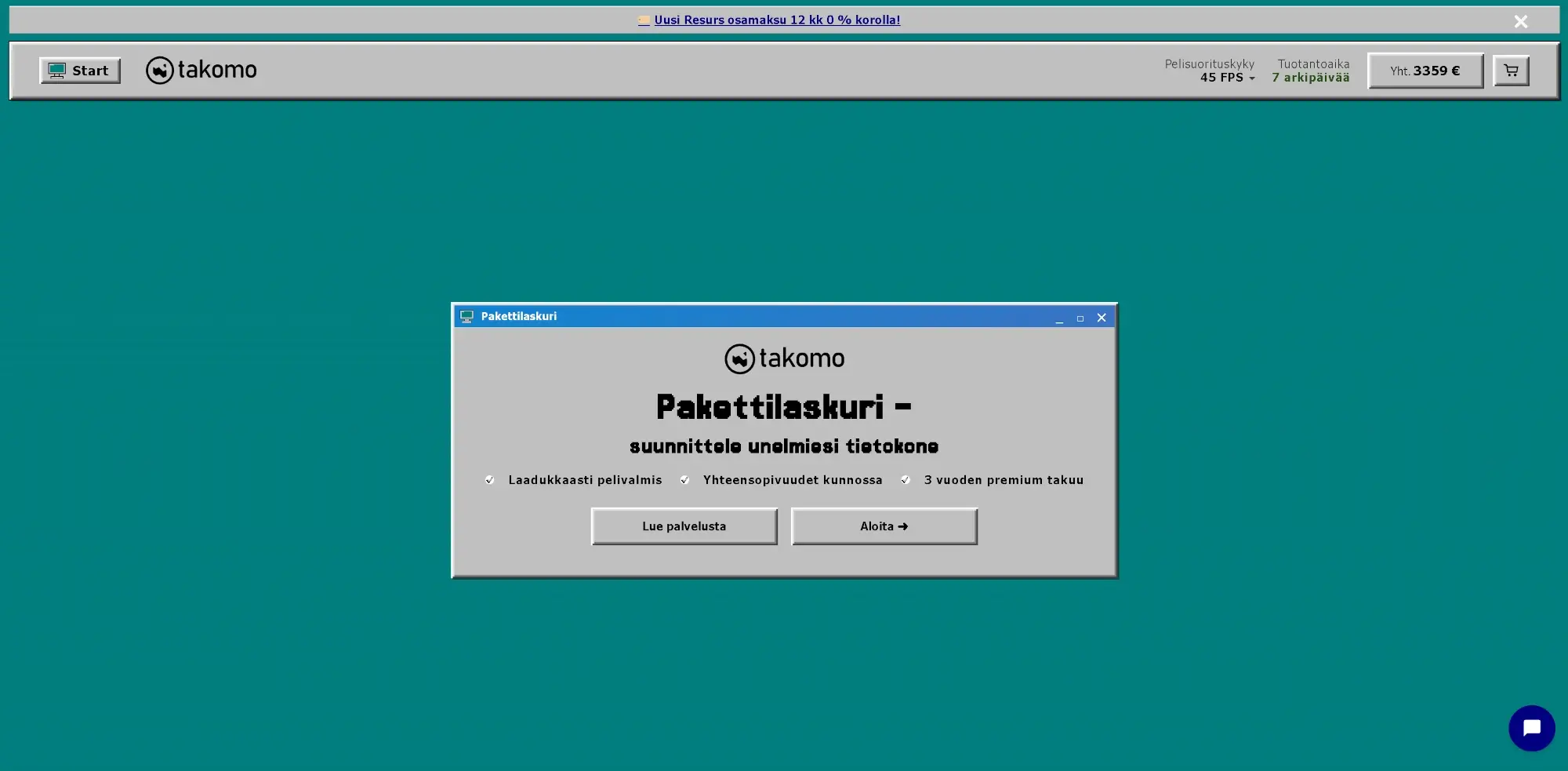
Products and prices stay the same. The experience changes completely.
Takomo 9x is perhaps the most fun detail of the whole project and, at the same time, one of the best examples of what Takomo wanted from its new online store. The store's user interface doesn't have to work as the platform's defaults dictate; it can be modified to be an essential part of the company's brand.
“Our online store's theme engine is a good example of the entire project. It's not a feature that would ever end up on a larger development team's roadmap.
The new AI-based tools and the workflow we built for Finqu's theme development have lowered the barrier for implementing even the wildest ideas in a way that would have been impossible to imagine a few years ago.”
The end result doesn't look like Finqu at all. It looks 100% Takomo.
The service continues even after the order
The PC Builder isn't the only part built for Takomo in the new store.
When a customer orders a custom gaming PC, a standard online store's "order is being processed" tells very little about the order's progress. At Takomo, the customer isn't left waiting for the package to be shipped. In the new store, this is made concrete directly on the customer's order page. The customer sees when the order was received, how many business days are estimated until the PC is finished, and when the computer has been shipped.
AI has also been integrated into the service in two different roles, with an appropriate AI model chosen for both purposes. The customer service assistant can answer questions about warranties, delivery, and customization, among other things.
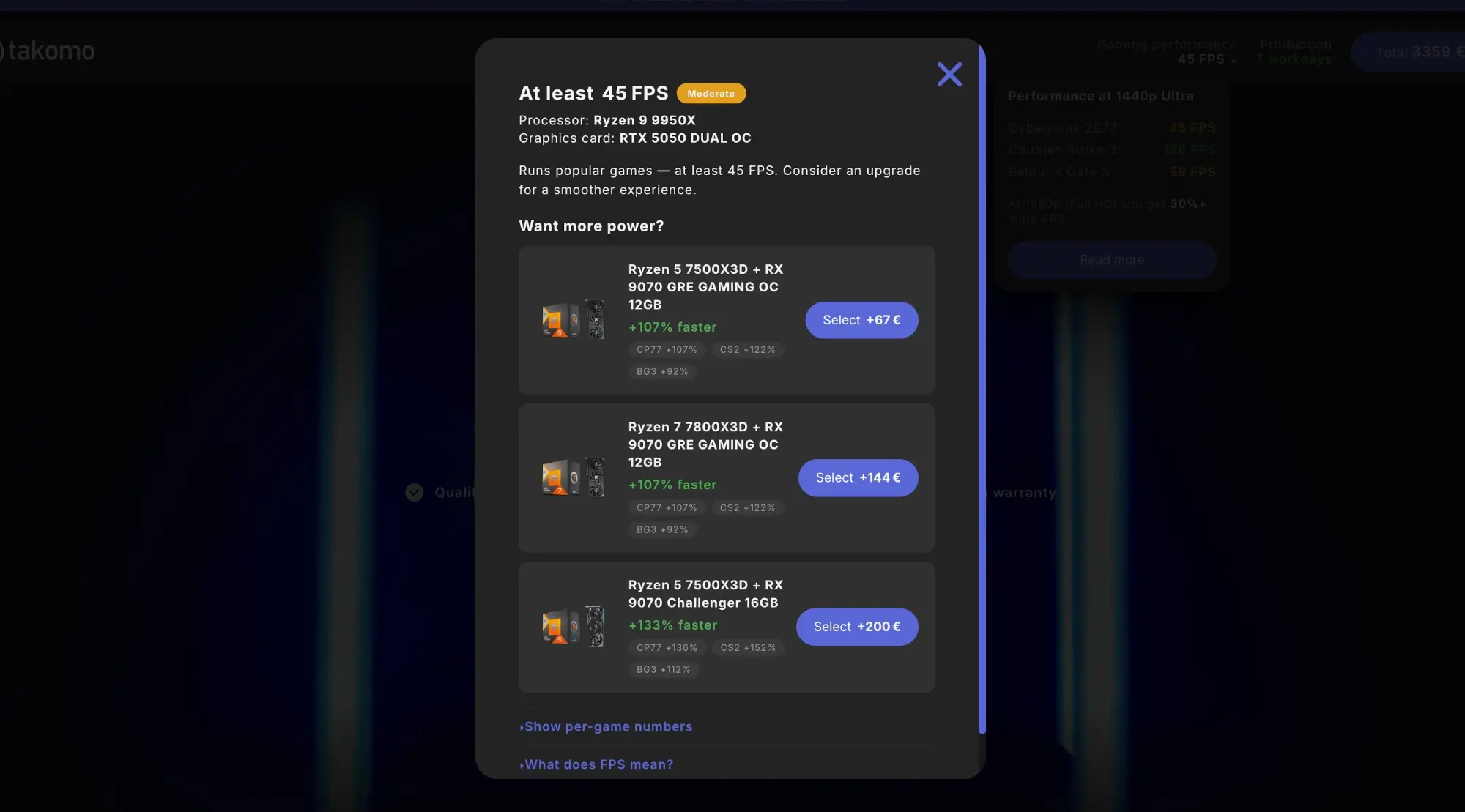
The PC Builder's assistant, on the other hand, helps analyze the user's setup and compare components with each other. Claude is used in customer service, while the configurator's analysis and comparisons are run on Gemini 3.1 Pro.
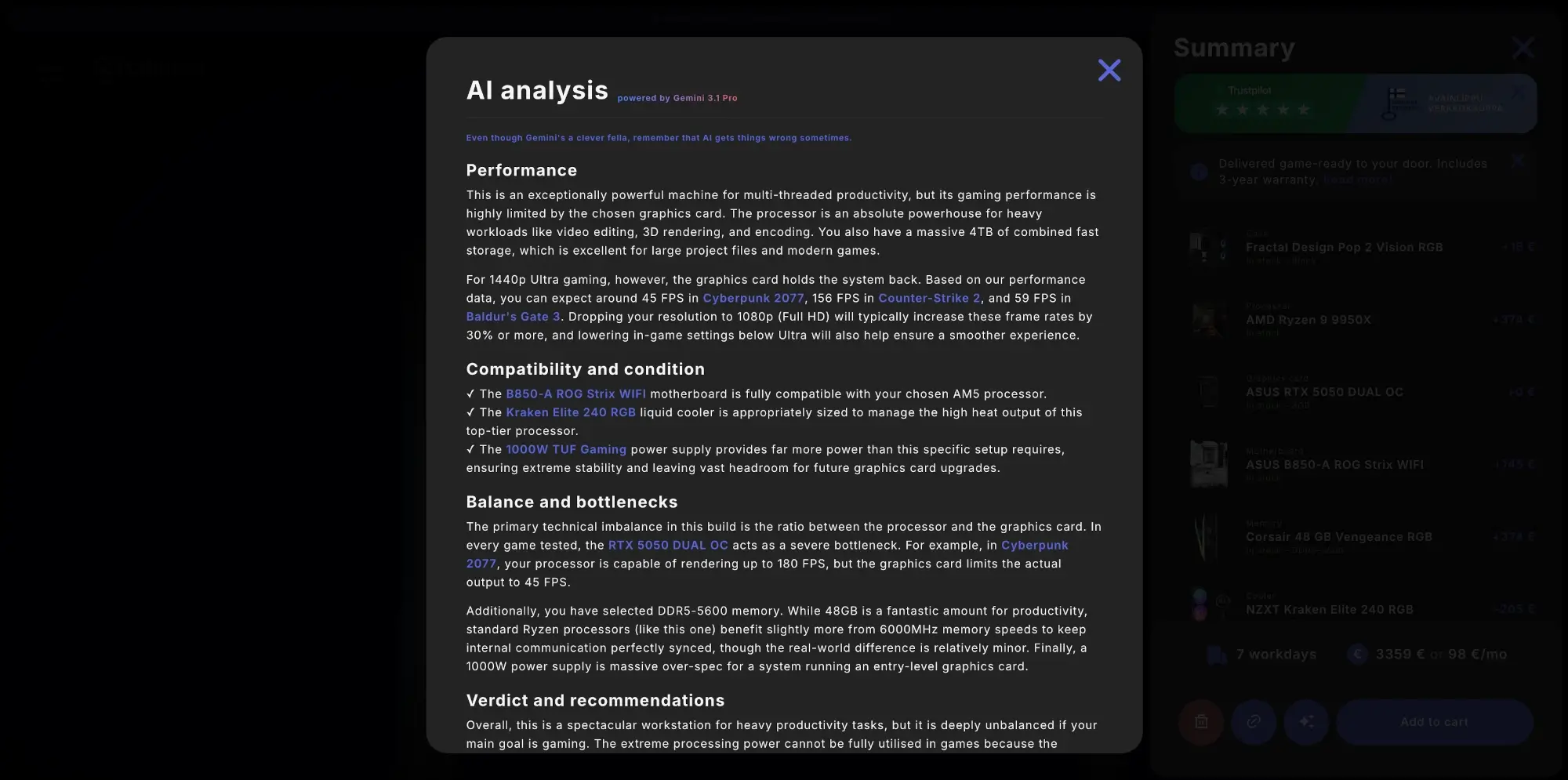
In both solutions, the starting point is the same: the online store follows Takomo's way of serving the customer even when ready-made e-commerce features aren't enough on their own.
What was it like building on Finqu?
In a highly customizable store, it's not just about what the platform offers out-of-the-box. There also has to be room for ideas that no one has implemented before.
Takomo's PC Builder is part of the same Finqu store where the customer ultimately makes their purchases. The custom selection logic, component comparisons, alternative UIs, and other solutions built for Takomo live in the same shopping experience and lead to the shopping cart and checkout in the normal way.
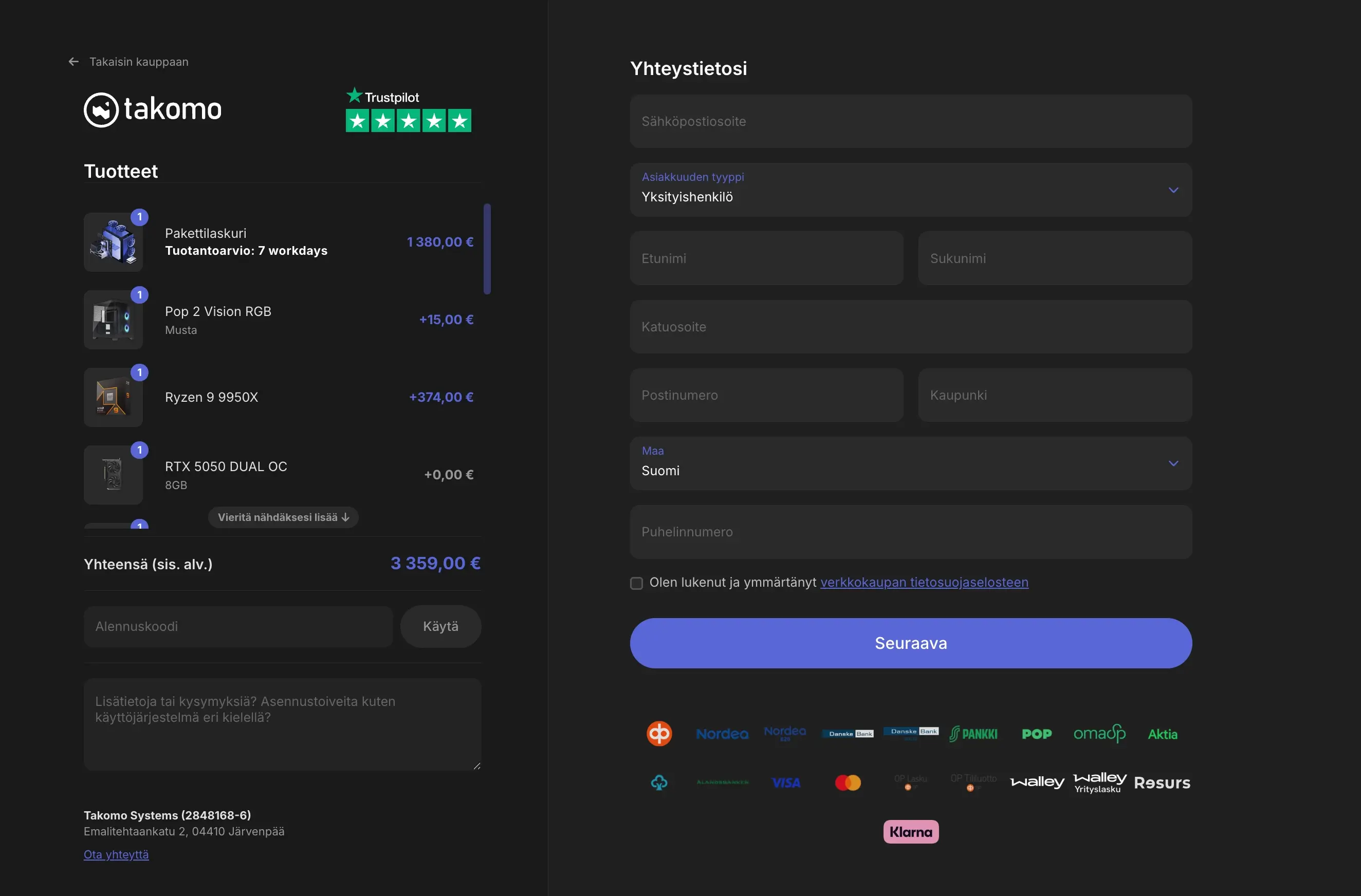
The checkout, payment methods, and order management were already in order by default, so they didn't need to be customized. This way, all development time could be spent on what is visible to the customer and what makes Takomo's store better than its competitors.
Still, building wasn't entirely frictionless. Takomo worked around some of the limitations themselves, and for others, they needed Finqu's help. For example, the customized estimated production time initially didn't carry over from the shopping cart all the way to the order, so the issue was fixed on the platform side.
“That is exactly what has been the best part of the whole project: a merchant of our size actually gets to talk to the people who can also implement changes to the platform. It's completely different from just talking to standard support. At Finqu, a change request didn't get buried along the way; it progressed all the way to where it could be tackled.”
Technical implementation in brief
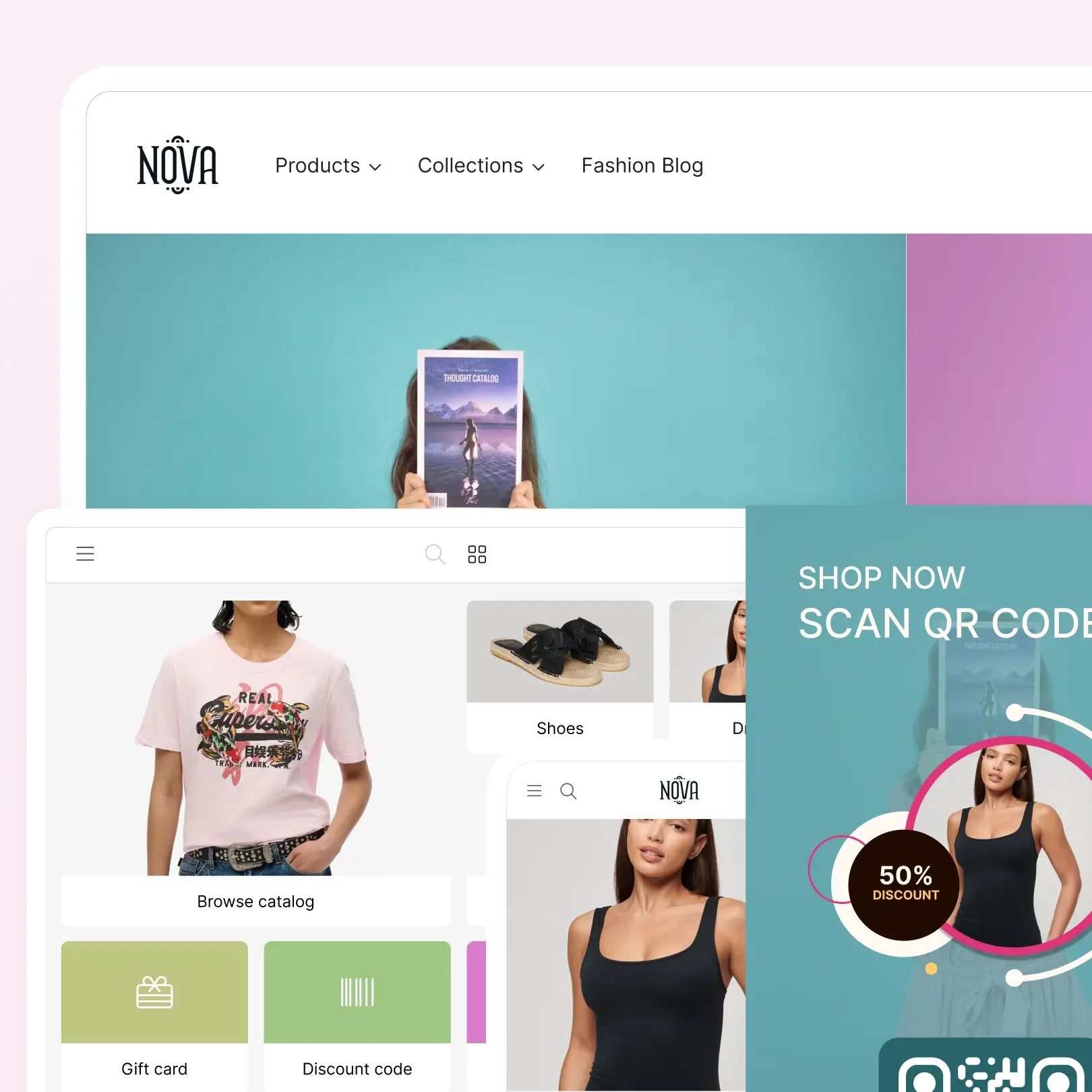
The store is built on top of Finqu's Nova theme, but from the customer's perspective, very little of the original theme remains. The theme code, styles, and browser logic have largely been written by Takomo.
The theme language used is Liquid—the same language as in Shopify. Therefore, the old store's structures and familiar way of thinking can be conveniently utilized instead of having to learn everything from scratch with a new platform.
Product data straight into the builder
The PC Builder needs the entire component selection at once: prices, stock statuses, images, and groupings for over a hundred products.
The data is built directly with the page using Liquid, so the builder doesn't have to wait for separate network requests to open. At the same time, product management remains standard Finqu product management. Components are regular products in their own product categories, and there's no need to maintain a separate product registry alongside them.
Entire setup into the cart at once
One gaming PC setup consists of 15–17 order lines that need to be added to the shopping cart as a single entity.
This is done via Storefront GraphQL with a single cartLinesAdd mutation, and the checkout URL is received in the same response. The estimated production time goes along as additional information on the line, so it can also be shown in the order confirmation and on the customer's order page.
Compatibility is resolved in the browser
Which parts fit together and what needs to be changed along with other choices is resolved in the browser using Takomo's own logic.
No special functionality is needed from the platform for this. It's enough that there's room for the theme's own JavaScript to do its job, and the product data is made available in the required format.
Checkout and messages are also finished to look like Takomo
The checkout operates outside the theme, so its appearance and minor functional additions are handled with Finqu's channel-specific JavaScript injections.
Order confirmation and shipping emails, on the other hand, are built as their own MJML templates in Finqu's email editor. The customization thus extends from the storefront to the checkout and all the way to post-order communication.
Development at their own pace before launch
The theme lives in git and synchronizes with a separate development theme. Changes can be tested as a real store before they are published to production and visible to customers.
In the development work itself, Takomo has almost exclusively used Anthropic's Claude models, always choosing the model according to the task.
- 135 components in 14 sections
- 47 compatibility rules
- 7 store layouts (themes)
- 2 maintained languages
Why Finqu instead of Shopify?
Takomo had known Shopify for years. It was a functional platform, and the new PC Builder could have been built on it as well.
When the PC Builder and a large part of the store's experience were going to be revamped anyway, the choice of platform was also reopened for consideration. The essential thing was that Finqu had to be able to carry out the same plan without Takomo having to lower its ambitions.
“Shopify was familiar and functional to us, and we didn't leave out of necessity. But since the builder and a large part of the store experience were being overhauled regardless, it was a natural moment to also re-evaluate the platform.”
The transition turned out to be technically more straightforward than expected. Both platforms use Liquid as their theme language, so the theme structure and mindset were immediately familiar. For someone migrating specifically from Shopify, this is a significant advantage.
Lower operating costs were clearly in Finqu's favor. Even more importantly, however, Takomo was able to build exactly the store it had planned. For example, modifying the checkout in Shopify is restricted to the most expensive subscription tier.
The platform's Finnish origins also weighed in the choice.
“We are a Finnish Avainlippu online store, and we build every device by hand in Järvenpää. It's logical that the store is also built on a Finqu's platform.”
Takomo's finished store makes comparing platforms concrete. A highly customized online store doesn't automatically mean Shopify. A customized experience can also be built on Finqu, where the store's structure, purchasing logic, and user interface are taken far according to the company's own needs.
“If someone were to ask us whether Finqu can handle a highly customized implementation, the answer is simple: we have successfully implemented all our development ideas without major friction, despite their ambition.
We didn't leave anything out of the plan just because the platform changed.”
Check out Takomo's online store → www.takomo.store
The new store is the foundation for the next ideas
Takomo itself describes its new online store as a platform for new things. It is an accurate way to think about the outcome of the entire project as well.
The PC Builder, component comparisons, different user interfaces, AI assistant, and the order page tracking production progress are not the endpoint. They are examples of how the online store can be developed ever more closely around Takomo's products, customers, and own way of operating.
The new store is therefore not just a successful overhaul.
It gives Takomo more room for whatever they come up with next.

Turn your idea into a thriving business — with all the tools you need, right from the start.