Case study: how a Finqu store reached #1 on Google with SEO

Kimmi.fi is an online fabric store for sewists and sewing enthusiasts, and they use Finqu as their eCommerce platform.
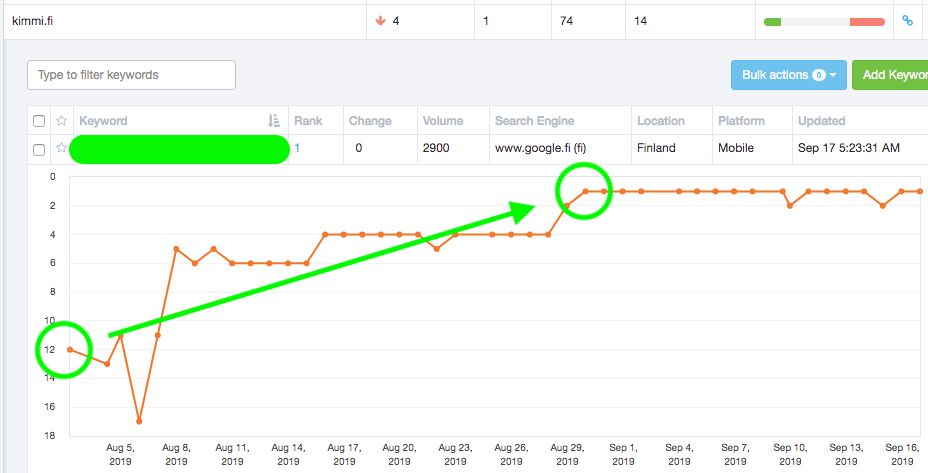
At the beginning of August 2019, Kimmi.fi ranked 12th on Google for their most important keyword — on page two of the search results.
By the end of the same month, they had reached #1.
So how did it happen?
Starting point and results
On August 3, 2019, Kimmi.fi ranked #12 on Google. Their pages had not yet been optimized for search engines, but during August they carried out a major SEO optimization project (more details later in this post).
The optimization focused on three major keywords, the most important of which had 2,900 searches per month. The project lasted one month, during which Kimmi reached #1 — and at the time of writing this blog, they have maintained the top position for their most important keyword.
What did the #1 Google ranking mean for the online store?
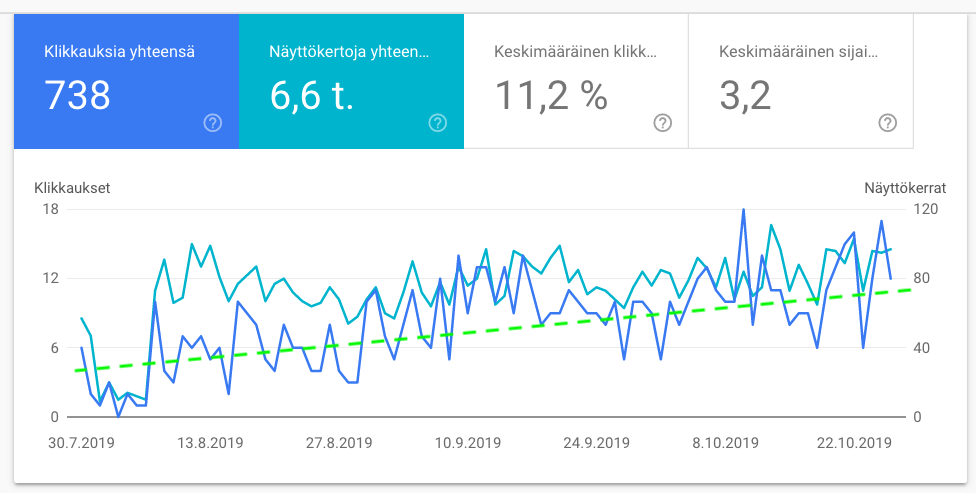
Between July 30 and October 28, the online store received a total of 738 organic visitors from the main keyword alone. This included visitors who had never been customers before.
The longer the ranking remained at the top, the more traffic the keyword generated. At the moment, the store receives around 10 visitors per day from this single keyword.
Actions taken
Week 1
- A comprehensive keyword analysis was conducted for the online store
- Three main keywords and pages were selected
- Gaps in existing optimization were identified
- New SEO titles and meta descriptions were created for three pages
- General technical SEO was improved (Google Maps, template adjustments, fixing broken links, etc.)
- A content plan for new pages was created
Week 2
- New content was written according to the plan
- Content was optimized once more
- Internal linking was improved so Google could better understand the site structure and keyword behavior
- Competitors’ backlink profiles were analyzed and guidelines for off-page SEO were provided
Week 3
- Results were reviewed and titles and content were refined based on click-through rate and readability
- A final report was compiled and a closing meeting was scheduled
Week 4
- The final meeting took place on August 26, when the main keyword ranked #4
- Keyword tracking tools were provided for the next two months
- When the ranking reached #2, permission was requested to use the case as a reference and publish this blog post
“You really couldn’t be more satisfied than this. The project practically paid for itself within the first month. Thank you for the great work — and you’re welcome to use Kimmi’s results as a reference.”
— Sara Salo, Kimmi.fi
3 easy steps to improve your search engine visibility
1. Find your keywords and current rankings
You can research keywords using free tools such as Google Ads Keyword Planner.
When you enter potential keywords, the tool suggests related keywords along with their monthly search volumes.
To find your rough current ranking, simply Google your keyword and check whether your site appears on the first three result pages.
2. Does your page match the searcher’s intent?
If you ran an ice hockey equipment store and wanted to attract hockey fans, we wouldn’t recommend targeting a high-volume keyword like “Vaasa ice hockey” — at least not initially.
Most searchers using that term are likely looking for:
- News about the Vaasa hockey team
- Recent match results
- The official team website
- Information about junior teams
Google’s goal is to serve users. That’s why SEO should always start with understanding the searcher’s intent. Optimization should be based on what the majority of users actually want to find.
3. Write titles and content based on user intent
Once you know the keyword and the user’s intent, it’s time to create or refine content accordingly.
If you run an online store selling specialized products and want to improve a category page’s visibility, a good approach is to include answers to the most frequently asked questions directly on the page.
The three pillars of SEO
Search engine optimization consists of three main areas:
- Content optimization (page-level)
- Technical optimization (site-level)
- Off-page optimization (links from other websites)
Content optimization ensures that:
- The page has enough high-quality, well-written text
- Google’s crawlers understand the content
- Visitors find answers to their searches
- The page is optimized for conversions
Technical optimization focuses on the entire site: page speed, layout, internal linking, responsiveness, and usability. The Finqu platform is already mobile-friendly, fast, and built with a search-engine-friendly structure. As a result, technical optimization mainly focuses on usability and internal linking of custom pages.
Off-page optimization is about trust and authority. The most important factors are:
- Number of incoming links
- Anchor text of those links
- Authority of the linking sites
If your site is brand new and no one links to it, your credibility in Google’s eyes is essentially zero. You can improve off-page SEO through blog collaborations, guest posts, and link exchanges with partners such as customers or resellers.
This blog post was written in collaboration with Hakukonekeisari.

Turn your idea into a thriving business — with all the tools you need, right from the start.